Understanding IPTV Transcoding And Why It Matters
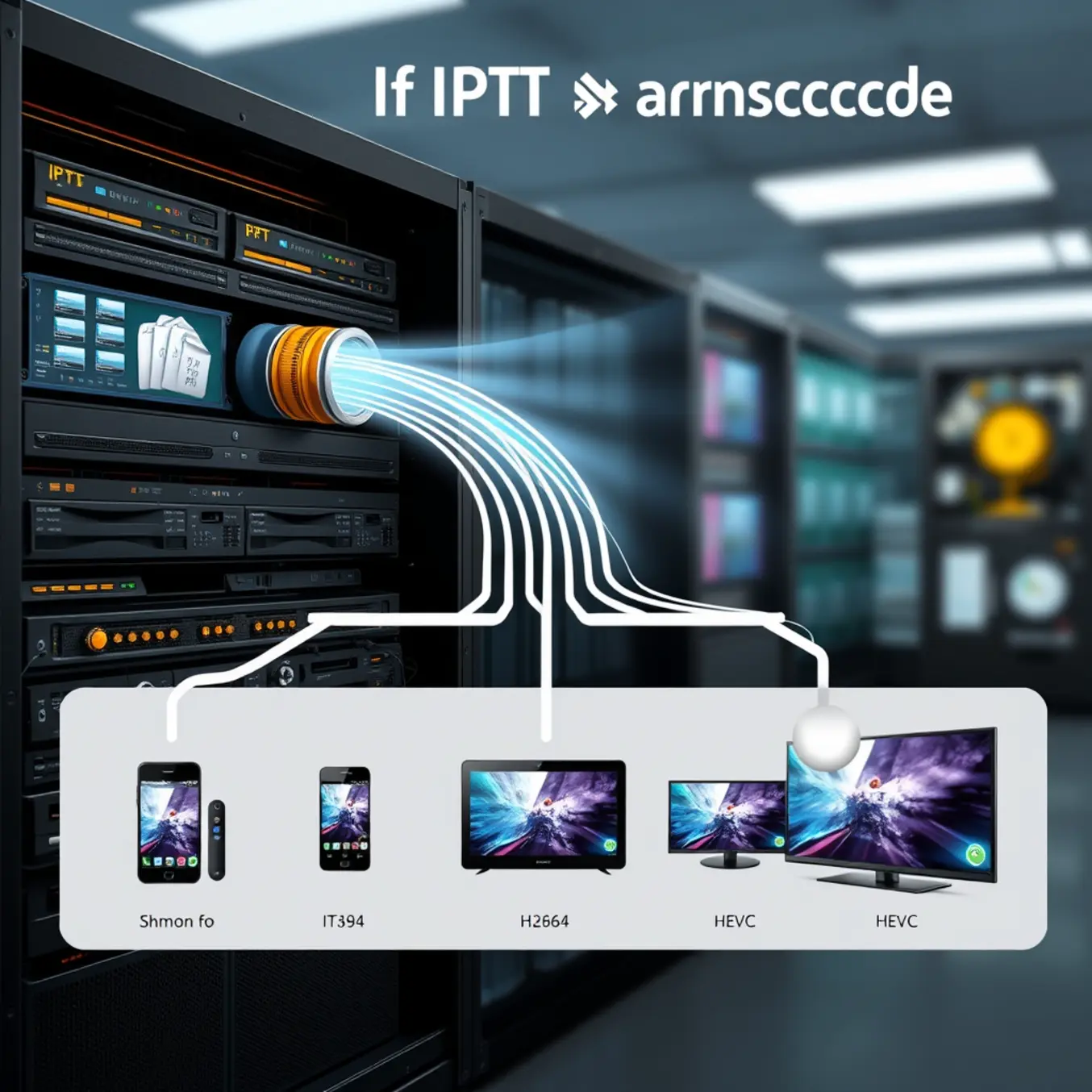
What Exactly is IPTV Transcoding?
IPTV transcoding is the behind-the-scenes process that makes video streaming possible across different devices and internet connections. Essentially, it converts video content from one format to another in real-time, ensuring compatibility with various devices and network conditions [Source: Streaming Media Blog].
The Language Problem in Video Streaming
Different devices speak different video “languages” – known as codecs. For example, your smartphone might prefer H.264 format, while your smart TV works better with HEVC. Similarly, internet speeds vary dramatically between users. Without transcoding, a single video stream would either buffer endlessly on slow connections or fail to play on incompatible devices.
Transcoding solves this by acting as a universal translator. It takes the original video stream and converts it into multiple versions optimized for different scenarios. This process happens almost instantly, allowing seamless viewing experiences regardless of your device or connection speed.
How Transcoding Works in Practice
The transcoding process involves three key steps: decoding, processing, and re-encoding. First, the system decodes the original video stream into raw data. Then, it processes this data by adjusting resolution, bitrate, or format. Finally, it re-encodes the video into the required output format.
For instance, when you stream a 4K movie through an IPTV service with 4K plans, transcoding ensures viewers with slower internet can still watch the same content in 1080p or 720p without buffering. This adaptive streaming capability is crucial for maintaining service quality across diverse user environments.
Why Transcoding Matters for IPTV Users
Transcoding directly impacts your viewing experience in several ways. It eliminates compatibility issues between your devices and content sources. Whether you’re using a Samsung Smart TV, Android box, or Firestick, transcoding ensures the video format matches your device’s capabilities.
Moreover, it optimizes bandwidth usage based on your available internet speed. If you’re experiencing buffering issues, transcoding can automatically lower the video quality to maintain smooth playback. This dynamic adjustment happens without requiring manual settings changes from the viewer.
The Technical Foundation
Modern IPTV services use sophisticated transcoding systems that support multiple codecs including H.264, H.265 (HEVC), and AV1. These systems can handle simultaneous conversions for hundreds or thousands of users, maintaining quality while minimizing latency. The processing power required for real-time transcoding is substantial, which is why premium IPTV providers invest heavily in robust server infrastructure.
According to streaming technology experts, transcoding represents one of the most computationally intensive aspects of video delivery systems. However, it’s essential for providing the flexible, device-agnostic viewing experiences that modern consumers expect from IPTV services.
Transcoding vs. Transrating: Understanding the Difference
While often used interchangeably, transcoding and transrating serve distinct purposes. Transcoding changes the video format or codec, while transrating adjusts the bitrate without altering the format. Many IPTV systems perform both operations simultaneously to optimize streams for different network conditions and device capabilities.
This combined approach ensures that whether you’re watching on a mobile data connection or fiber optic broadband, the service delivers the highest possible quality your specific situation can support. The result is a consistently reliable viewing experience across all your devices and locations.
The Magic Behind the Scenes: How Transcoding Works
Transcoding serves as the invisible engine that powers seamless IPTV streaming by converting video content from its original format into one compatible with your specific device and network conditions. This complex process involves decoding the source stream and then re-encoding it into a format that matches your device’s capabilities and available bandwidth [Source: Wowza].
Real-Time Adaptation for Perfect Playback
Modern IPTV services employ sophisticated transcoding systems that analyze multiple factors in real-time to deliver the best possible streaming quality. These systems continuously monitor your internet connection speed, device processing power, and screen resolution capabilities. Consequently, they dynamically adjust video bitrates, resolution, and compression levels to maintain smooth playback without sacrificing visual quality. This adaptive approach means that whether you’re watching on a 4K television or a mobile device with limited bandwidth, the transcoding process ensures you receive the highest quality stream your setup can handle.
Key Technical Parameters in Transcoding
Transcoding involves manipulating several critical video parameters to optimize streaming performance. The primary considerations include video codec conversion (such as H.264 to H.265), resolution scaling (from 4K to 1080p or 720p), bitrate adjustment, and frame rate modification. Additionally, audio transcoding converts audio tracks to compatible formats like AAC or MP3 while maintaining synchronization with the video stream.
The Role of Container Formats
Beyond codec conversion, transcoding also handles container format changes to ensure compatibility across different devices and applications. Common container formats include MP4, TS, and MKV, each with varying support across streaming platforms and devices. The transcoding process repackages the audio and video streams into containers that your specific IPTV player or device can properly interpret. This container transformation works alongside M3U playlist management to deliver a cohesive streaming experience across diverse viewing environments.
Hardware vs. Software Transcoding
IPTV providers utilize either hardware-based or software-based transcoding solutions, each with distinct advantages. Hardware transcoding employs specialized processors (like GPUs or dedicated ASICs) to handle the computationally intensive task of video conversion, offering superior speed and efficiency for large-scale operations. Meanwhile, software transcoding uses general-purpose CPUs and provides greater flexibility for handling diverse codec requirements [Source: Intel Cloud Media Processing].
Impact on Streaming Quality and Reliability
The effectiveness of transcoding directly influences the visual quality and reliability of your IPTV service. Properly implemented transcoding minimizes artifacts, maintains color accuracy, and preserves detail during the format conversion process. Furthermore, it enables features like multi-bitrate streaming, where the same source content is simultaneously transcoded into multiple quality levels. This approach allows seamless quality switching during playback, which is particularly valuable for viewers with variable internet speeds or those using different devices throughout their viewing day.
Transcoding in Multi-Device Environments
Contemporary IPTV services must accommodate an increasingly diverse ecosystem of viewing devices, each with unique technical specifications and capabilities. Transcoding bridges these compatibility gaps by converting source streams to formats optimized for specific device categories—whether smartphones, tablets, smart TVs, or streaming boxes. This device-specific optimization ensures that whether you’re using Firestick, Android devices, or smart TVs, the transcoding process delivers content in the most efficient format for that particular hardware, maximizing both performance and battery life where applicable.
Future Developments in IPTV Transcoding
Transcoding technology continues to evolve alongside advancements in video compression and streaming protocols. Emerging codecs like AV1 promise greater compression efficiency, while technologies like per-title encoding optimize transcoding parameters based on the specific characteristics of each video. These innovations will further enhance the efficiency of IPTV transcoding, reducing bandwidth requirements while improving visual quality. As noted in our coverage of 2025 IPTV trends, artificial intelligence is increasingly being integrated into transcoding systems to make smarter real-time decisions about quality optimization and resource allocation.
Video Codecs Demystified: H.264 vs H.265
Video codecs serve as the fundamental building blocks of modern streaming, acting as sophisticated compression algorithms that shrink massive video files into manageable sizes for transmission over the internet. These digital workhorses employ complex mathematical techniques to eliminate redundant information while preserving visual quality, making services like IPTV streaming possible across varying bandwidth conditions.
H.264: The Industry Standard
Also known as Advanced Video Coding (AVC), H.264 emerged in 2003 and quickly became the universal standard for video compression. This codec revolutionized digital video by delivering high-quality streams at approximately half the bitrate of its predecessors. Its widespread adoption across streaming platforms, Blu-ray discs, and video conferencing systems made it the go-to choice for over a decade.
H.264 achieves compression through several key techniques: motion compensation predicts movement between frames, spatial redundancy reduction eliminates duplicate pixel information, and entropy encoding further compresses the data stream. According to research from the International Telecommunication Union, H.264 can reduce raw video data by up to 1,000 times while maintaining acceptable quality.
H.265: The Efficiency Revolution
High Efficiency Video Coding (HEVC), commonly known as H.265, arrived in 2013 as the successor to H.264. This next-generation codec introduced groundbreaking improvements by supporting larger block sizes (up to 64×64 pixels versus H.264’s 16×16 maximum) and more sophisticated prediction algorithms. Consequently, H.265 delivers comparable video quality at roughly 50% of the bitrate required by H.264.
The enhanced compression efficiency makes H.265 particularly valuable for 4K and Ultra HD streaming, where file sizes would otherwise become prohibitively large. Research from the Moving Picture Experts Group confirms that H.265 can reduce bandwidth requirements by 40-50% compared to H.264 at equivalent quality levels.
Practical Implications for IPTV Streaming
The efficiency difference between these codecs directly impacts your streaming experience and infrastructure requirements. H.265’s superior compression means viewers can enjoy high-definition content with significantly less buffering, even on slower internet connections. This becomes particularly important for households with multiple simultaneous streams or those accessing content through limited bandwidth connections.
For service providers, H.265’s efficiency translates to substantial cost savings in storage and bandwidth. A streaming platform can store approximately twice as much H.265 content compared to H.264 in the same server space, while consuming less bandwidth during transmission. However, this efficiency comes with increased computational demands during the encoding process.
Device Compatibility and Performance
While H.264 enjoys near-universal support across devices from smartphones to smart TVs, H.265 compatibility has become increasingly common in modern hardware. Most devices manufactured after 2015 include hardware acceleration for H.265 decoding, ensuring smooth playback without excessive battery drain or processor usage.
Older devices might struggle with H.265 content, potentially leading to playback issues or increased power consumption. This compatibility consideration is crucial for IPTV services targeting diverse device ecosystems, where transcoding between codecs might be necessary to ensure universal accessibility.
Choosing the Right Codec for Your Needs
The decision between H.264 and H.265 depends on several factors, including your target audience’s devices, available bandwidth, and content resolution. For standard definition and 1080p content targeting broad device compatibility, H.264 remains a reliable choice. Meanwhile, H.265 excels for 4K streaming, bandwidth-constrained environments, and services prioritizing storage efficiency.
Many modern IPTV providers now utilize both codecs, automatically serving the optimal format based on the user’s device capabilities and network conditions. This adaptive approach ensures the best possible viewing experience while maximizing resource utilization across the streaming infrastructure.
As streaming technology continues evolving, newer codecs like AV1 and VVC (Versatile Video Coding) promise even greater efficiency gains. Nevertheless, H.264 and H.265 will remain foundational to IPTV services for the foreseeable future, balancing quality, compatibility, and performance across the diverse landscape of modern streaming.
Adaptive Bitrate Streaming: The Smart Delivery System
Adaptive bitrate streaming (ABS) is the intelligent technology that automatically adjusts video quality based on your internet connection speed. This dynamic system ensures smooth playback without buffering interruptions, even when network conditions fluctuate. When you stream content, your device continuously monitors available bandwidth and selects the optimal video quality from multiple pre-encoded versions of the same content.
The process begins with content preparation, where video files are encoded into multiple quality levels—from low-resolution versions for slower connections to high-definition streams for faster networks. These different quality streams are then segmented into small chunks, typically 2-10 seconds in duration. Your streaming device downloads a manifest file that contains information about all available quality options, then selects the appropriate segment based on current network conditions [Source: Akamai Technologies].
The Role of IPTV Transcoding in ABS
IPTV transcoding serves as the bridge between broadcast sources and adaptive streaming delivery. Transcoding converts live broadcast streams into multiple bitrate versions in real-time, enabling the adaptive bitrate system to function with live content. This process involves decoding the incoming video stream and re-encoding it into various quality levels simultaneously, creating the multiple versions needed for adaptive delivery.
Modern IPTV services use sophisticated transcoding systems that can process hundreds of channels simultaneously, converting them into formats compatible with various devices and connection speeds. This ensures that whether you’re watching on a mobile device with limited bandwidth or a 4K television with fiber internet, the system delivers the best possible quality without interruptions. For viewers concerned about internet requirements, our guide on IPTV internet speed requirements provides detailed information about optimal connection speeds.
The Technical Process Behind Seamless Streaming
The adaptive bitrate algorithm operates through continuous feedback between your device and the streaming server. Every few seconds, your player measures download speed, buffer health, and device capabilities, then requests the next video segment at the appropriate quality level. If your connection improves, the system automatically upgrades to higher quality; if it deteriorates, it gracefully downgrades to prevent buffering.
This intelligent switching happens seamlessly in the background, with most viewers never noticing the quality adjustments. The system maintains a buffer of several segments to absorb network fluctuations, ensuring that temporary speed drops don’t interrupt your viewing experience.
Benefits for IPTV Viewers
Adaptive bitrate streaming provides significant advantages for IPTV subscribers. First, it eliminates the frustration of constant buffering that plagued early streaming technologies. Second, it optimizes bandwidth usage, preventing unnecessary data consumption when higher quality isn’t achievable. Third, it enables consistent viewing across different devices and network environments—from mobile data to home Wi-Fi.
For sports enthusiasts who can’t afford interruptions during crucial moments, this technology ensures uninterrupted coverage of live events. Similarly, movie viewers benefit from the highest possible quality their connection can support. Our sports streaming guide explains how modern IPTV services leverage these technologies for optimal live event viewing.
Implementation Across Different Devices
The effectiveness of adaptive bitrate streaming varies depending on your streaming device and application. Modern smart TVs, streaming boxes, and mobile apps all implement ABS, but with different capabilities and optimization levels. High-end devices typically feature more sophisticated algorithms and can handle higher quality streams, while older devices might have limitations.
Popular IPTV applications like TiviMate and IPTV Smarters Pro include customizable settings for adaptive streaming, allowing users to fine-tune their experience. These applications work in conjunction with IPTV services that maintain robust server infrastructure to deliver the multiple stream versions required for adaptive bitrate technology.