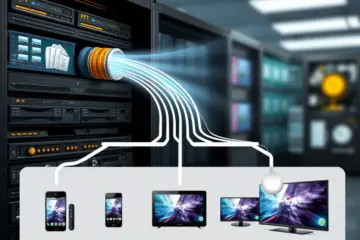
alt_text: A photorealistic infographic shows raw video files entering a server rack and being transcoded into smaller H.264 and HEVC streams for different devices.

Understanding IPTV Transcoding And Why It Matters

The post “Understanding IPTV Transcoding And Why It Matters” explores the critical role of transcoding in optimizing IPTV streaming. It highlights how transcoding converts video formats to ensure compatibility across diverse devices, enhances user experience by reducing buffering and latency, and enables efficient bandwidth management. The article underscores transcoding’s advantages, including improved video quality, adaptive streaming, and scalability for large audiences. Distinctively, it emphasizes transcoding as a cornerstone for delivering seamless, high-quality IPTV content in today’s varied viewing landscape.

6 IPTV Technologies That Reduce Buffering

The WordPress post “6 IPTV Technologies That Reduce Buffering” highlights innovative solutions enhancing IPTV streaming by minimizing interruptions. It explores key technologies like adaptive bitrate streaming, edge caching, and multicasting, emphasizing their roles in optimizing data delivery and ensuring smoother viewer experiences. The post underscores the advantages of these technologies, such as reduced latency, improved video quality, and efficient bandwidth usage, setting them apart as essential for modern IPTV services aiming to provide seamless, buffer-free content consumption.