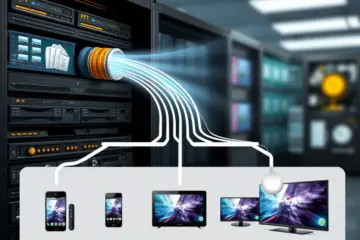
alt_text: A photorealistic infographic shows raw video files entering a server rack and being transcoded into smaller H.264 and HEVC streams for different devices.

Understanding IPTV Transcoding And Why It Matters

The post “Understanding IPTV Transcoding And Why It Matters” explores the critical role of transcoding in optimizing IPTV streaming. It highlights how transcoding converts video formats to ensure compatibility across diverse devices, enhances user experience by reducing buffering and latency, and enables efficient bandwidth management. The article underscores transcoding’s advantages, including improved video quality, adaptive streaming, and scalability for large audiences. Distinctively, it emphasizes transcoding as a cornerstone for delivering seamless, high-quality IPTV content in today’s varied viewing landscape.


alt_text: A glowing blue digital shield protects a live sports stream, deflecting and disintegrating menacing red cyber-threats.

How IPTV Providers Secure Your Streaming Links

The post “How IPTV Providers Secure Your Streaming Links” explores the advanced security measures IPTV services implement to protect streaming links from unauthorized access and piracy. It highlights key features such as encryption protocols, token-based authentication, and dynamic link generation that ensure secure, uninterrupted viewing experiences. The article underscores the advantages of these technologies in safeguarding user privacy, enhancing content protection, and maintaining service integrity. Distinctively, it showcases how leading IPTV providers combine multiple security layers to deliver reliable and secure streaming tailored to modern digital consumption demands.

alt_text: A sleek TV displays four live events: a red carpet, a sports game, a concert, and breaking news in a modern living room.

Live IPTV Vs Time Shift IPTV A Comprehensive Comparison

The post “Live IPTV Vs Time Shift IPTV: A Comprehensive Comparison” explores the key differences between Live IPTV, which offers real-time streaming of TV channels, and Time Shift IPTV, which allows viewers to pause, rewind, and watch content at their convenience. It highlights Live IPTV’s advantage in delivering immediate access to live events and news, while Time Shift IPTV excels in flexibility and user control over viewing schedules. The article underscores their unique benefits-Live IPTV’s immediacy versus Time Shift’s convenience-guiding readers to choose the best option based on their entertainment needs.

6 IPTV Technologies That Reduce Buffering

The WordPress post “6 IPTV Technologies That Reduce Buffering” highlights innovative solutions enhancing IPTV streaming by minimizing interruptions. It explores key technologies like adaptive bitrate streaming, edge caching, and multicasting, emphasizing their roles in optimizing data delivery and ensuring smoother viewer experiences. The post underscores the advantages of these technologies, such as reduced latency, improved video quality, and efficient bandwidth usage, setting them apart as essential for modern IPTV services aiming to provide seamless, buffer-free content consumption.

How Multi Bitrate Streaming Improves IPTV Playback

Multi Bitrate Streaming revolutionizes IPTV playback by dynamically adjusting video quality to match the viewer’s internet speed, ensuring smooth and uninterrupted viewing. This technology optimizes bandwidth usage, reduces buffering, and enhances user experience across various devices. Its adaptive nature not only supports diverse network conditions but also boosts overall streaming efficiency, making IPTV more reliable and accessible.

What Is IPTV Middleware And Why It Matters

IPTV middleware is the critical software that connects end-users with IPTV services, managing content delivery, user interfaces, and device compatibility. It streamlines the user experience by enabling seamless streaming, interactive features, and efficient content management. Key advantages include enhanced scalability, personalized content access, and robust security. Its distinctiveness lies in bridging diverse devices and networks, ensuring smooth operation and empowering service providers to innovate and monetize effectively. IPTV middleware is essential for delivering a flexible, engaging, and reliable IPTV ecosystem.

Behind The Screens How IPTV Encodes HD And 4K Video Streams

The WordPress post “Behind The Screens: How IPTV Encodes HD And 4K Video Streams” reveals the intricate technology powering IPTV streaming. It highlights key features such as advanced compression algorithms, real-time encoding processes, and adaptive bitrate streaming that ensure smooth, high-quality HD and 4K playback. The post underscores advantages like reduced bandwidth usage, enhanced viewer experience, and compatibility with diverse devices. Its distinctive quality lies in demystifying complex encoding techniques, offering readers an insightful glimpse into the seamless delivery of premium video content behind the scenes.

Why CDN Technology Is Critical For IPTV Providers

The post highlights CDN technology as essential for IPTV providers, emphasizing its role in delivering high-quality, buffer-free streaming to a global audience. Key advantages include enhanced content delivery speed, reduced latency, and scalability, ensuring seamless user experiences even during peak demand. Distinctive qualities such as reliability, efficient load balancing, and improved bandwidth management position CDN as a critical infrastructure for IPTV services aiming to maintain competitive edge and customer satisfaction.

The Architecture Behind IPTV How Servers Handle Millions Of Streams

The post “The Architecture Behind IPTV: How Servers Handle Millions Of Streams” delves into the sophisticated infrastructure enabling IPTV services to deliver vast amounts of content seamlessly. It highlights key features such as scalable server design, efficient content delivery networks (CDNs), and advanced load balancing techniques. The article underscores advantages like reduced latency, enhanced stream reliability, and optimized bandwidth usage. Distinctive qualities include the integration of cutting-edge encoding technologies and real-time monitoring systems, ensuring high-quality viewer experiences even under massive simultaneous demand.